To reset your mind and body at your workstation, you need structured, low-friction physical movements and conscious breathing breaks that fit into your busy schedule. Practicing Desk Yoga provides an immediate physical release from the compression of sitting and restores mental focus without requiring a change of clothes or a yoga mat. Most office workers spend eight to ten hours a day bound to a chair, watching their posture slowly collapse into rounded shoulders and spinal compression. This physical stagnation is not just an aesthetic issue: it directly impairs your breathing capacity and triggers a low-grade physical stress response that drains your mental clarity.
We have all seen the wellness advice that tells you to step away from your desk for a full hour-long class. For most working professionals, that is entirely unrealistic. When deadlines are pressing, leaving your desk is simply not an option. The solution is to adapt classical physical practices to the space you currently occupy. By utilizing your chair and desk as props, you can systematically address physical tension and mental fatigue where they accumulate.
Why Sitting All Day is Quietly Draining Your Vitality
When you sit for extended periods, your body enters a state of structural hibernation. Large muscle groups go quiet, slowing circulation and metabolism. Simultaneously, tight hip flexors pull your pelvis out of alignment, straining your lower back while your thoracic spine rounds forward toward your keyboard.
This structural collapse restricts your diaphragm, forcing shallow chest breathing. This signals a constant stress state to your sympathetic nervous system, raising your heart rate and increasing mental fatigue. Introducing intentional movement breaks this physical feedback loop to restore calm.
Can micro-stretches really reverse hours of sitting?
Many assume a three-minute movement break is too brief to matter. However, movement science shows frequent micro-breaks are highly effective for maintaining spinal health. You do not need a full sixty-minute sequence to benefit. Small, targeted adjustments throughout the day prevent tissues from setting into stagnant shapes, acting as structural resets that preserve your range of motion.
Why does your breath get shallow when you look at a screen?
This pattern is a documented phenomenon known as screen apnea. When focusing intensely on a computer screen, your breathing naturally becomes shallow or stops entirely. This subconscious reaction triggers a stress response, leaving you exhausted despite sitting still. Integrating conscious, rhythmic breathing into your routine reverses this pattern, immediately lowering your heart rate and restoring oxygen flow.
A Practical Sequence for Desk Yoga and Daily Restoration
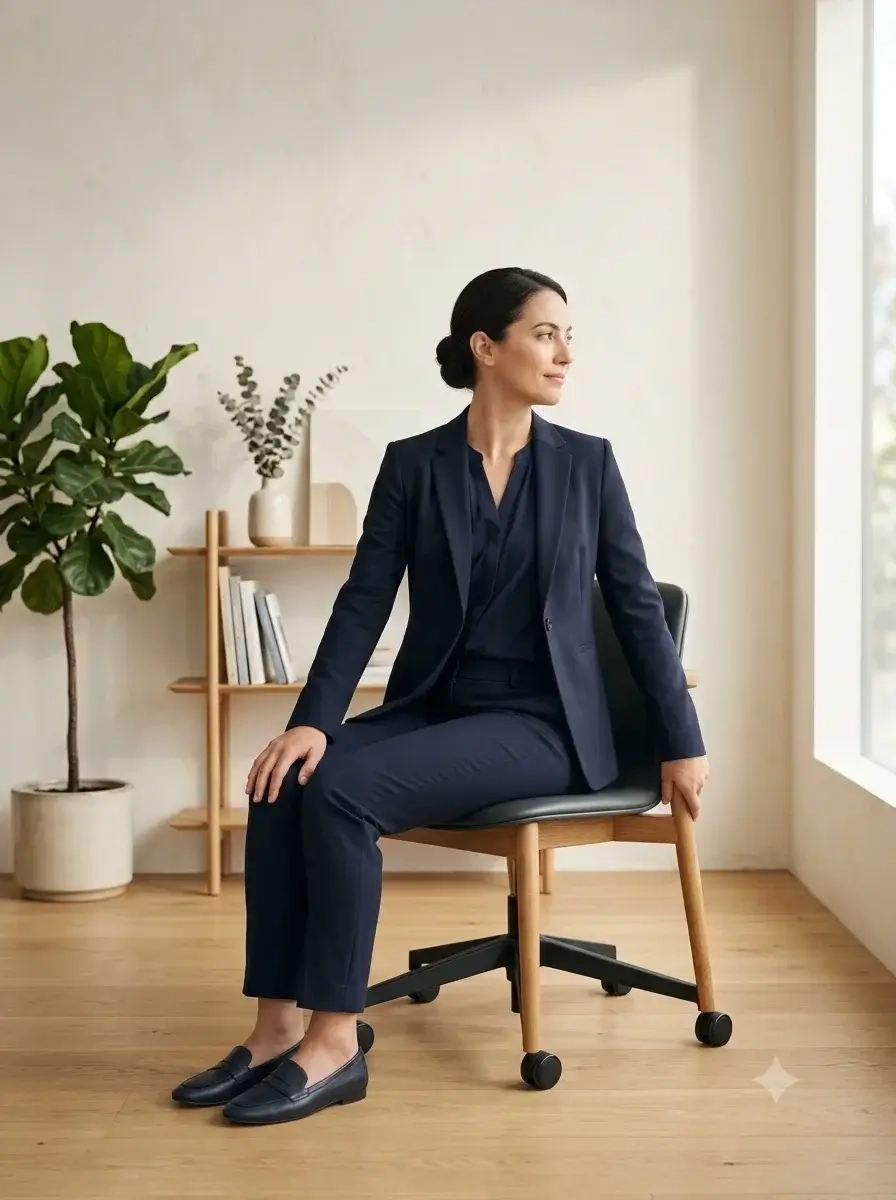
To practice effectively at your workstation, you only need a stable chair, preferably one that does not roll. These movements are designed to be performed in standard professional clothing, allowing you to move through your day with ease.
First, begin with a seated spinal release to address lower back compression. Sit toward the front edge of your chair with your feet flat on the floor, directly under your knees. As you inhale, gently arch your spine, pulling your chest forward and drawing your shoulders back. As you exhale, round your spine, tucking your chin toward your chest. Repeat this cycle five times, matching your movement to your breath to mobilize your entire spine.
Next, target your tight shoulders with a modified chest opener. Reach your arms behind your back and interlace your fingers, or grab the back edges of your chair if your hands do not meet. Inhale deeply as you roll your shoulders down and back, lifting your chest toward the ceiling. Hold this position for five deep breaths, focusing on expanding your ribcage with each inhalation to counteract forward-slumping posture.
Third, address hip tightness with a seated hip opener. While sitting tall, lift your right ankle and place it on top of your left knee, creating a shape like the number four. Keep your right foot active by flexing your toes toward your shin. If you need a deeper stretch, gently hinge forward from your hips, keeping your spine long and straight. Hold for five breaths, then repeat on the other side.
Finally, finish with a standing desk stretch to wake up your legs. Stand up and face your desk, placing your hands flat on the surface about shoulder-width apart. Step your feet back until your body forms an L-shape, with your hips directly over your feet and your spine parallel to the floor. Press your hands firmly into the desk as you push your hips back, letting your chest melt toward the floor. Take five slow, deep breaths, feeling the stretch along the sides of your body.
Writing Style Implications of the Yogpriya Design System
In our classical teaching practice at Yogpriya, physical movement requires clarity and precision. Our brand design system reflects this belief, prioritizing clean lines, high-contrast visual structures, and direct communication. We avoid flowery descriptions and vague wellness promises, focusing instead on clear anatomical directions and practical breathing cues.
This structured approach ensures safe, effective practice in a busy office environment. Stripped-down, direct teaching helps you focus on physical experience rather than complex terminology. Our goal is to make physical restoration accessible and highly functional for your daily life. Explore these foundational approaches on our page covering classical Hatha Yoga principles, which forms the basis for these adaptations.
Why do we keep our instructions so direct?
We keep our instructions direct because clarity reduces the mental effort required to restore thoracic mobility. When you are already mentally exhausted from a demanding workday, you do not want to read a complicated guide on alignment. You need clear, actionable cues that you can implement immediately. This directness also ensures safety, as clear physical boundaries prevent injury and help you find the correct alignment without needing an instructor in the room with you.
Physical restoration at work is not about escaping your duties; it is about building the physical resilience to perform them with a clear, focused mind.
Overcoming the Friction of Office Movement
The biggest obstacle to maintaining a physical practice at work is the social friction of moving in a professional setting. Many people feel self-conscious stretching in front of colleagues or worry that taking a break will make them look unproductive. Overcoming this mental barrier is essential for establishing a consistent routine.
Your physical health directly impacts your productivity. Taking a three-minute break to stretch and breathe is not a waste of time; it is an investment in your work quality. When you return to your tasks with a clear head and a comfortable body, you will work faster and make fewer mistakes. Many teams find that introducing group movement breaks can improve collective focus and morale. To learn more about how we implement these practices in corporate settings, you can view our corporate wellness programs.
Is it possible to stretch without looking strange to coworkers?
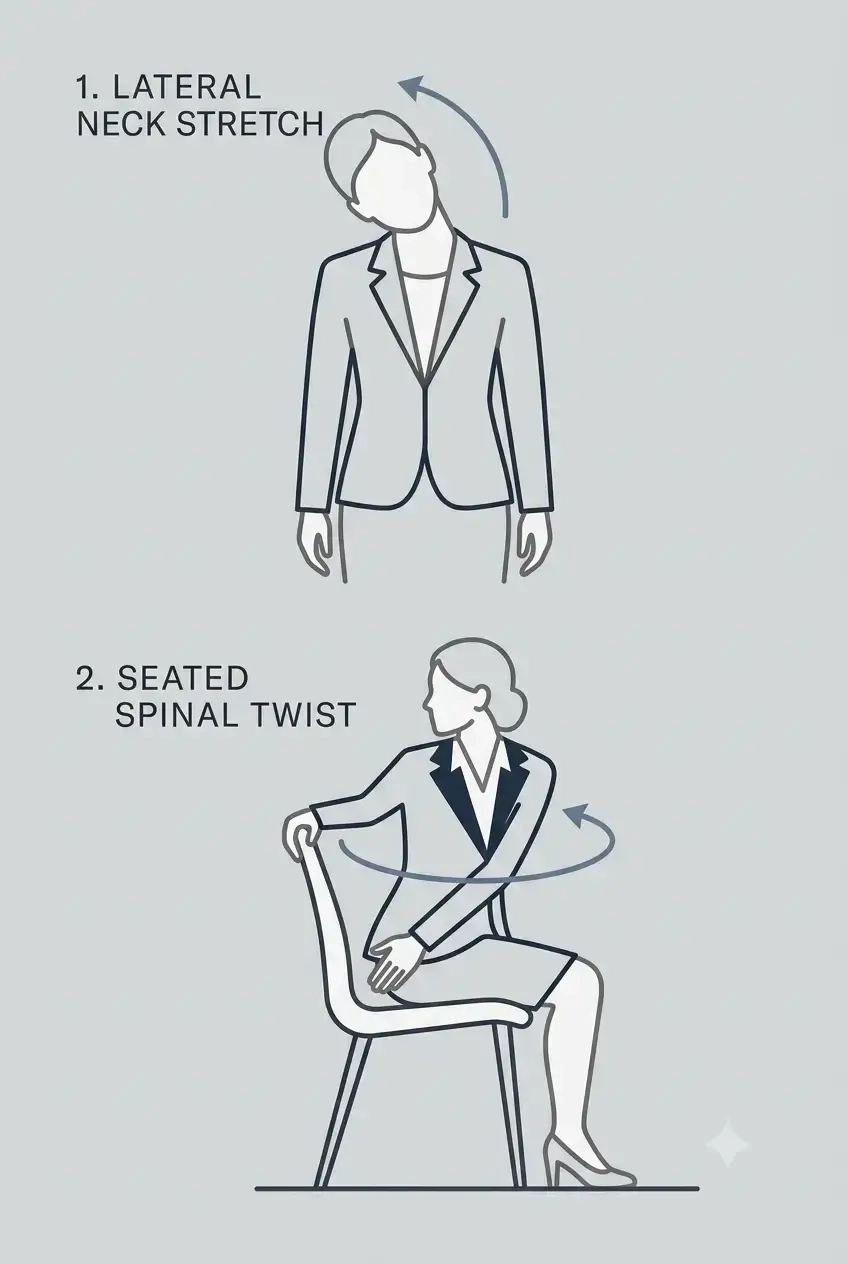
Yes, you can easily adapt your movements to be incredibly subtle. Many effective physical resets can be done without anyone else noticing. For example, ankle rolls, neck releases, and seated spinal twists look like natural posture shifts rather than a formal exercise routine. You can also focus entirely on your breath, using quiet diaphragmatic breathing to calm your nervous system without moving a muscle.
How do you build a habit when your calendar is packed?
The most effective way to build a consistent habit is to anchor your breaks to existing daily triggers. Instead of trying to remember to stretch, tie your practice to a specific event that happens every day. For example, you can commit to doing a two-minute chest opener every time you finish a meeting, or practice a seated hip stretch right before you eat lunch. By linking your movement to these regular triggers, you make physical restoration an automatic part of your workday.
Elevate Your Workday with Professional Guidance
While self-guided stretches are beneficial, working with an experienced instructor can elevate your physical practice and target chronic tension. Our customized sessions fit seamlessly into your schedule, providing sequences tailored to your unique physical and mental needs. If you are ready to transform your relationship with your workspace, you can Book a Session with our instructors through our online booking portal.
Through personalized instruction, you will learn to refine your alignment, deepen your breath, and integrate sustainable habits into your professional life. Whether you want individual coaching or wish to introduce these benefits to your entire team, we offer solutions that support your well-being. Let us help you find balance and clarity in the middle of your busiest workdays with a customized program of Desk Yoga.
Bring physical restoration and mental clarity directly to your workspace. Start your journey with personalized Desk Yoga sessions designed to fit your busy schedule. Book your introductory session today and experience the immediate benefits of mindful movement.
Frequently asked questions
Do I need to change into athletic wear to practice these movements?
No, you do not need to change your clothes. All of these movements are designed to be performed in standard professional attire, including suits, dresses, and casual workwear. These gentle, controlled stretches ensure you can restore your body without sweating or straining your clothing.
How often should I take a movement break during the workday?
We recommend taking a short movement break every sixty to ninety minutes. A brief two-minute stretch or a few deep breaths can reset your posture, stimulate blood circulation, and clear mental fatigue. Consistency is far more beneficial than duration for preventing physical stagnation.
Can I practice these stretches if I have an active lower back injury?
If you have an active injury, consult your healthcare provider before starting any new physical routine. Always listen to your body and avoid any movements that cause pain. Modify the stretches to stay within a comfortable, pain-free range of motion, and focus primarily on gentle breathing exercises.
What is the best way to handle rolling office chairs during practice?
If your office chair has wheels, push it against a stable wall or desk to prevent it from rolling away during your movements. Alternatively, you can lock the wheels or perform the standing variations while supporting yourself with a stable, heavy desk or wall surface.
How can I introduce these physical practices to my corporate team?
You can introduce these practices by scheduling a dedicated corporate session with our professional instructors. We offer custom sessions tailored to corporate groups, delivered virtually or in person. Starting meetings with a shared two-minute breathing pause is also an excellent way to introduce these concepts.


Leave a Reply