Most corporate wellness sessions teach breathing as a quick fix: take a deep breath when you are stressed and hope your racing heart slows down. In practice, this reactive approach rarely works because your body recognizes forced deep breathing during a panic state as another stress signal. Real relief requires a systemic override of your autonomic nervous system, which is where the clinical application of Pranayama benefits becomes a practical tool rather than a mystical concept. By altering the pace, depth, and pattern of your breath, you can consciously down-regulate your flight response in under three minutes. This is not about seeking spiritual transcendence: it is about biological hacking through precise, pressure-based airway mechanics. When you control the breath, you control the nervous system.
Why reactive breathing fails under high corporate stress
When you are staring at a critical deadline or managing a high-stakes presentation, your sympathetic nervous system is highly active. Your heart rate increases, your blood pressure rises, and your breathing becomes shallow and rapid. Trying to fix this by simply taking a deep breath often backfires. When you inhale deeply and quickly, you can inadvertently signal more danger to your brain, exacerbating the fight or flight response. This is because rapid chest breathing mimics the hyperventilation of a true emergency.
Is box breathing the only option for stress?
Many modern wellness programs recommend box breathing, a method popularized by tactical teams. While a symmetrical four-second pattern is highly useful for maintaining intense focus under pressure, it is not always the most effective tool for deep physiological recovery. To truly calm an overactive nervous system, you need to extend your exhalations relative to your inhalations. When your exhalation is longer than your inhalation, your brain receives a direct signal that you are safe. This is not a psychological trick: it is a physiological reflex. If you want to learn how to transition from high stress to deep rest, practicing with structured guidance can make a substantial difference. You can explore these structured methods through our yoga classes, where we teach classical techniques designed for sustained recovery.
Experiencing the physical shift of Pranayama benefits
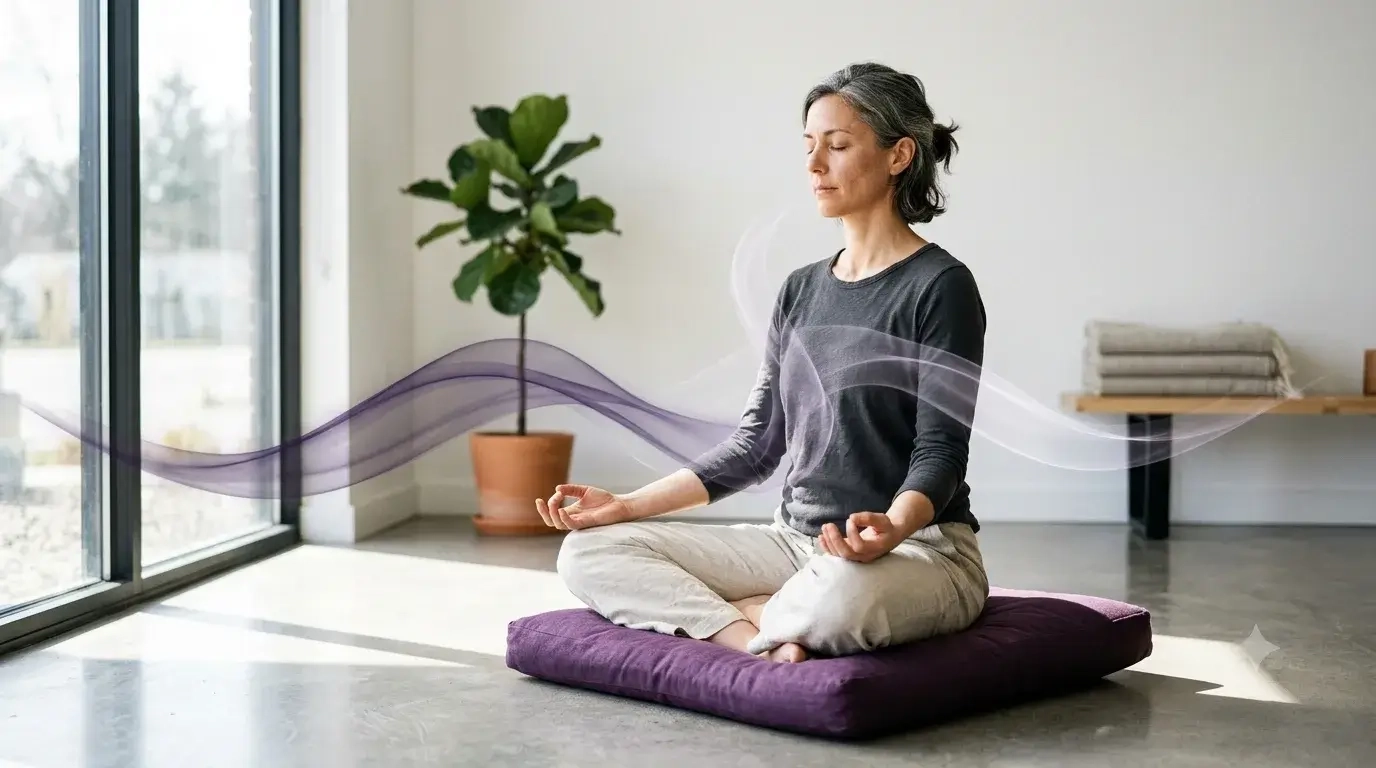
To understand the physiological mechanics, we must look at how breathing influences your cardiovascular system. Every time you inhale, your diaphragm moves downward, creating more space in your chest cavity. This extra space causes blood pressure to drop slightly, which prompts your heart to beat faster to maintain steady circulation. When you exhale, your diaphragm moves upward, your chest cavity shrinks, blood pressure rises, and your heart rate slows down. This biological rhythm is the foundation of heart rate variability, a primary metric of physical resilience.
By intentionally lengthening your exhalations through classical techniques, you maximize this natural deceleration. This process triggers vagus nerve stimulation, activating the parasympathetic branch of your nervous system. The benefits of this practice go far beyond temporary relaxation. Regular practice helps lower baseline blood pressure, improves sleep quality, and increases your threshold for stress. Instead of relying on external substances to calm down, you develop a reliable internal mechanism to regulate your state of mind. For teams looking to build this resilience in a professional setting, our corporate wellness programs provide structured, evidence-based training that fits into the workday.
Can you alter your heart rate variability in minutes?
Yes, you can measure this shift in real time using biofeedback devices. When you transition from erratic, shallow breathing to a rhythmic five-second inhale and seven-second exhale, your heart rate variability immediately begins to stabilize. This rhythmic breathing pattern coordinates your heart rate with your respiratory rate, a state known as respiratory sinus arrhythmia. This state of coherence signals to your brain that your immediate environment is safe, allowing your digestive and immune systems to function optimally. It is a simple, mechanical shift that requires no belief system: only a willingness to sit still and alter your breathing pattern for a few minutes.
Deconstructing the mechanics of classical breath control
In classical Hatha Yoga, breath control is never treated as a single, uniform practice. Different techniques serve distinct physiological purposes. Some exercises are designed to stimulate your system, while others are meant to cool and quiet it. Understanding these distinctions prevents you from using the wrong tool at the wrong time. For example, practicing a highly stimulating technique right before bed can cause insomnia, while practicing a deeply calming technique before a big meeting might leave you feeling sluggish.
Does the nostril you breathe through matter?
It sounds like a minor detail, but the nasal cycle is a well-documented physiological phenomenon. At any given moment, one of your nostrils is more open than the other, alternating every ninety to one hundred and twenty minutes. This cycle is directly linked to your autonomic nervous system. Breathing primarily through your right nostril stimulates your sympathetic nervous system, increasing your heart rate, body temperature, and logical focus. Breathing through your left nostril, however, activates your parasympathetic nervous system, lowering your heart rate and encouraging a quiet, reflective state of mind.
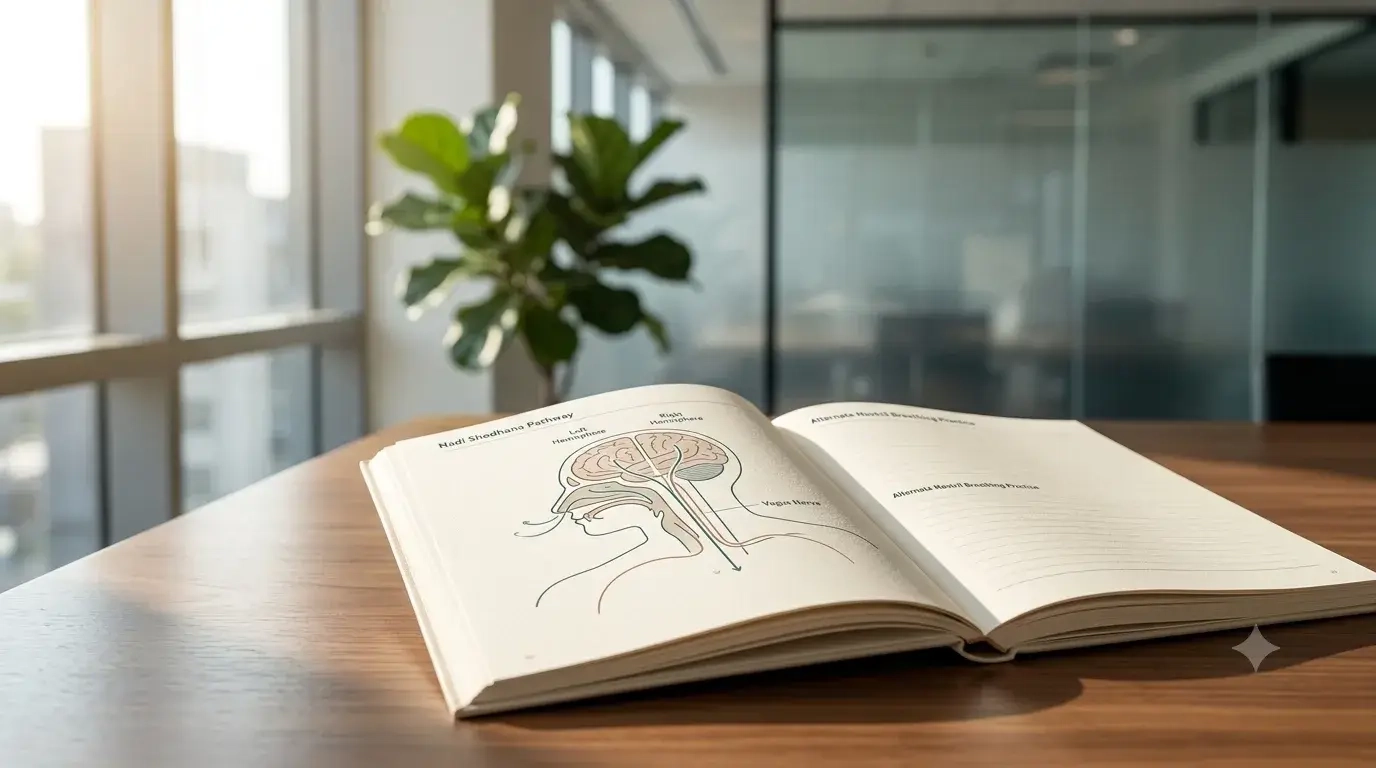
The classical practice of Nadi Shodhana, or alternate nostril breathing, balances this cycle. By systematically closing one nostril and then the other, you encourage a state of equilibrium between both hemispheres of your brain. This practice is particularly useful when you feel mentally scattered or overwhelmed. It brings your system back to a neutral baseline, allowing you to approach complex tasks with a clear, steady focus. It is a highly practical tool that requires no special equipment, making it ideal for busy professionals who need to reset their minds between demanding tasks.
Integrating breathwork into a demanding corporate schedule
The greatest barrier to establishing a consistent practice is not a lack of interest, but a lack of time. Most people believe they need thirty minutes of silent meditation in a dark room to experience real change. In reality, consistency is far more important than duration. Practicing for three minutes, three times a day, is far more effective for your nervous system than practicing for thirty minutes once a week. The goal is to prevent your stress levels from peaking in the first place, rather than trying to recover from a complete burnout at the end of the day.
How do you practice without looking strange at your desk?
You do not need to sit in a full lotus posture or make loud noises to practice effectively. You can use subtle techniques that are virtually invisible to those around you. One of the most effective methods is a quiet version of Ujjayi pranayama, often called the ocean breath. By slightly constricting the back of your throat, you create a soft, whispering sound that only you can hear. This constriction acts as a physical valve, slowing down the movement of air and naturally lengthening your breath. It increases pressure in your chest cavity, which stimulates your vagus nerve and immediately slows your heart rate. You can practice this during a virtual meeting, while writing an email, or while commuting, without anyone realizing you are doing anything other than breathing normally.
Writing style implications of the brand design system
At Yogpriya, our brand identity is built on a clear, trustworthy, and balanced approach to wellness. This philosophy is reflected in our visual design system, which uses a stark, primary black and white palette, deep purple highlights, and structured layouts with clean, rounded corners. These visual choices directly influence how we communicate with you. We do not use vague, exaggerated, or overly poetic language to describe our practices. Instead, we present classical Hatha Yoga and meditation through a practical, structural lens.
Our prose is designed to be direct, evidence-based, and easy to understand. Just as our website design avoids unnecessary clutter, our writing avoids empty marketing buzzwords and dramatic claims. We believe that ancient practices do not need to be mystified to be effective. By explaining the physiological mechanisms behind every breath and posture, we provide you with practical tools that you can confidently integrate into your daily life. This commitment to clarity ensures that you receive the highest standard of instruction, whether you are practicing with us online or in person.
True control over your mind begins with the deliberate management of your breath.
Begin your breathwork journey today
Calming your nervous system is not a passive event: it is an active practice that requires the right guidance. By understanding the physical mechanics of your breath, you can take control of your stress levels and improve your long-term health. To explore how these practices can support your personal wellness or benefit your organization, contact our team for a consultation today. Let us help you discover how the targeted application of Pranayama benefits can bring balance, clarity, and resilience to your busy modern life.
Frequently asked questions
How long does it take to feel the physical effects of these breathing techniques?
You can usually feel a physical shift in your nervous system within two to three minutes of starting a structured practice. Your heart rate slows down, your muscles begin to relax, and your mind becomes clearer as your parasympathetic nervous system activates.
Can I practice these exercises if I have a blocked nose?
If your nasal passages are blocked, you should avoid alternate nostril breathing. Instead, focus on simple diaphragmatic breathing through your mouth with a slightly closed throat, keeping your exhalations twice as long as your inhalations.
Is it safe to practice these techniques during pregnancy?
Gentle, rhythmic breathing exercises are safe and highly beneficial during pregnancy. However, you must avoid any techniques that require you to hold your breath or use rapid, forceful abdominal movements, such as Kapalbhati.
What is the best time of day to practice breathwork?
The early morning is ideal for establishing a consistent routine on an empty stomach. However, practicing a calming technique for a few minutes before bed or during a stressful workday is also highly effective for immediate stress relief.
Do I need prior yoga experience to start practicing these methods?
No prior experience is necessary to begin. These practices are highly accessible and can be modified to suit anyone, regardless of physical fitness or experience level, making them an ideal starting point for wellness.


